by sefali | Jul 26, 2024 | Blog
It’s not just about the latest blockbuster or the roar of your surround sound, crafting an unparalleled movie experience requires the perfect screen. Our latest launch, Silver Screen Paint for 3D projection is here to ensure that you have the perfect canvas for the magic to unfold.
Following the success of our top-selling ALR Projector Paint and Ultra High-Contrast Projector Screen Paint, we’re excited to unveil Silver Screen Paint. This culmination of years of research by our R&D team is designed to push the boundaries of your home theater experience and all spaces where the highest gain levels are needed.
This comprehensive buyer’s guide delves into the world of Silver Screen Paint. Exploring its unique features and potential to enhance your movie experience to new heights.
What is Silver Screen Paint?
Smarter Surfaces Silver Screen Paint is a 3D projector paint that turns any wall or smooth surface into an ultimate 3D projection screen. Not just the high-end home theaters, this specialized paint is ideal for commercial spaces like — movie halls, museums, galleries, and event arenas too.
What makes it stand out is the ability to reflect an extremely high amount of the projected light. This higher light reflection eliminates any loss in picture quality even in environments with low to medium ambient light. As a result, you get brighter and cleaner images with high depth and clarity.
To achieve this feat, the paint has a high-density of silver particles, capable of reflecting maximum light. This is how it ensures the perfect resolution for 3D projection.
Our Silver Screen Paint can be applied to any wall or smooth surface. You can even use it over old fabric screens to refurbish them. However, it’s not suitable for roll-up screens.
Now that we have a clear idea about the paint and what it does, here’s a lowdown on the key benefits that make it the best choice for high-definition 3D projection.
Why should you spend on Silver Screen Paint?
Whether your 3D projection setup graces a home theater, conference hall, or commercial space, Silver Screen Paint is the perfect complement. Engineered specifically for 3D technology, it unlocks the clarity and effects you crave from a premium projection screen. Let’s check out the key benefits at a glance.
Top 10 benefits:
- Best 3D image in class: Silver Screen Paint boasts a high light reflectivity, acting like a wide-spread mirroring surface for your projector’s light. This translates to crisper images and sharper resolutions, ensuring every detail pops in 3D. Plus, the paint is polarity preserving, meaning the recreated images will have exactly the same polarity as is intended, preserving the complete 3D effect.
- Commercial grade quality: The paint is designed for use with the most powerful 3D projection equipment. It thrives in environments with powerful 3D setups and controlled lighting, making it the perfect fit for home theaters, cinemas, museums, and galleries. The expansive 140-degree viewing angle ensures the best viewing experience from every angle.
- Supports high-definition audio: Our silver screen paint is acoustically transparent. This means, the sound waves can penetrate the screen material with minimum reduction in strength. So, the screen will not diminish sound quality or act as a barrier between the speakers and the audience.
- Adaptable to different lightings: Silver Screen Paint adapts to your environment’s ambient light conditions. Whether you have a completely darkened room for maximum immersion or your space has a touch of ambient light, the paint delivers stunning 3D visuals. It is ideal for completely dark, light-controlled rooms as well as rooms with low to medium ambient light.
- Top-notch projector compatibility: Tested rigorously with industry-standard 3D projectors, Silver Screen Paint guarantees optimal performance. It works seamlessly with HD, 4K, and 8K projectors with a minimum 3000 lumen value from all top manufacturers like Sony, Epson, Christie, Hisense, and Optoma. No more worries about hot spots or a drop in quality — it delivers pure, unadulterated 3D magic.
- Brings effortless elegance: The silver screen paint for projector doesn’t sacrifice aesthetics for performance. Its spray application ensures a smooth, sleek, semi-matte finish that seamlessly integrates into your space, making a statement without stealing the show. It also eliminates the need for any projector screen accessories and saves space.
- Simple application with minimal downtime: The silver paint is spray applied and only 2 coats of the paint on a well-primed surface is all you need to design the screen. It will be ready to use in just 24 hours. So, if prolonged downtime is a concern, this paint is the perfect solution for you.
- Long service for no upkeep: This 3D projector paint doesn’t peel or yellow over time. It gives service for years for minimal maintenance. To keep it clean, just dust off the screen with a dry cloth or wipe it off with a damp cloth once in a while. And it will be as good as new. It even comes with a 5-year guarantee for complete peace of mind.
- Cost-effective: Our silver screen paint delivers better picture quality than most commonly available 3D screens and the cost you pay for it is worth every penny. Also, it costs less compared to large or custom installations of traditional 3D screens.
- Safe and environment friendly: Smarter Surfaces silver screen 3D projector paint is free from harmful solvents, isocyanates and has very low VOC. It exceeds all environmental standards and is completely safe for use in homes and public places.
Wondering if a silver projector screen is better than white? Let us tell you that a high-quality silver screen is always a better choice because it gives more flexibility. Traditional white projector screens struggle with ambient light, washing out details and compromising image quality.
Silver Screen Paint, however, boasts superior light reflectivity, ensuring vibrant, high-resolution 3D visuals even in moderately lit environments. This makes it the ideal choice for those who desire a more flexible viewing experience, without sacrificing image fidelity.
But don’t just take our word for it. Here’s what one of our first customers has to say about the new launch — Silver Screen Paint:
“I’m impressed with the ultra-smooth finish and great image quality. However, it needs a high-quality 3D projector to unlock the full potential of this paint. In my setup, I use an Epson 5050ub, which I believe pairs exceptionally well with the painted screen.
Silver Screen Paint truly shines in environments with low to medium ambient light, particularly when paired with a powerful projector.
The deep silver color of Smarter Surfaces Silver Screen Paint elevates the viewing experience by significantly enhancing image reflection. It’s a game-changer for our home cinema, creating a truly immersive 3D experience.”
Intrigued by the prospect of a phenomenal 3D experience in your own space? We understand the allure. Before you embark on the journey, let’s take a quick look at the Silver Screen Paint application process.
How to apply Silver Screen Paint?
Smarter Surfaces’ silver screen paint for projectors should be spray applied and you’ll need a spray paint gun for it. Detailed recommendations on the type of gun and spray tip size, are available in the application guide provided.
Also, keep in mind, this paint should be spray applied and you’ll need a spray paint gun for it. Detailed recommendations on the type of gun and spray tip size, are available in the application guidelines provided with the paint.
The application has three simple steps — surface preparation, paint application, and curation
Surface preparation
- You need a smooth, clean, and dry surface to begin with. Ensure that it’s free from loose paint or particles. Fill in any gaps or cracks to ensure the surface is even.
- If the surface is bare or untreated, prime it with two coats of Smart White Primer. Let the first coat dry completely before you apply the second.
- Sand the surface lightly with a smooth sandpaper before applying the silver screen paint.
Paint application
- Stir the paint well. Spray the paint evenly on the prepared surface to create the first coat.
- Once this coat is completely dry, spray the second coat. Ensure a minimum wet film thickness of 80 microns in each coat.
Curation
- After both coats have been applied, let the fresh silver screen paint projector surface dry for a minimum of 24 hours before use.
If you have a commercial project that demands a customized silver projection screen, contact us for assistance.
Check out this video for application of our Silver screen paint
Wrapping it up
Silver screen paint is a modern technology-driven projection surface solution designed specifically for high-end 3D projection. The range of benefits it offers surpasses expectations and ensures the highest three-dimensional cinematic experience.
Silver Screen Paint transcends the boundaries of residential applications. Its efficacy extends to grand commercial spaces like museums, cinemas, and galleries, delivering exceptional performance.
Ready to unlock the potential of your 3D setup? Try our silver screen paint and see the difference.

by sefali | Jul 19, 2024 | Blog
Whether you are just starting out in your teaching position or have been shaping students for quite a while, implementing new teaching approaches and strategies in your classrooms is the best option to keep up with the latest trends.
The global education landscape has already undergone a dynamic transformation. To prepare students for an AI-driven future and manage decreasing attention spans, teachers need more than just passive learning and rote memorization.
They need innovative teaching strategies that promote curiosity and cultivate critical thinking. Engaging teaching methods that empower students to become active participants in their own learning journey, is the need of the hour.
In this blog, we will explore some of the most effective teaching approaches and strategies for UAE Schools. We also highlighted some key pointers that you, as a teacher, can consider before introducing a new teaching strategy into your lesson plan.
What are Teaching Strategies and Techniques?
Imagine teaching a classroom full of unique learners – each with their own strengths, weaknesses, and preferred learning styles. Teachers need to focus on unique teaching strategies and techniques.
Strategies are the broad plans that guide the overall structure of a lesson. They encompass the learning objectives, chosen activities, and assessment methods.
Teaching techniques that bring these strategies to life. These include things like group activities, virtual field trips, or interactive simulations. They are the practical actions teachers take within the framework of the chosen strategy.
The ideal teaching strategy depends on a variety of factors. The most effective approach often involves a combination of strategies, tailored to the specific needs of your students and the learning goals you’ve set.

Engaging Teaching Strategies for UAE Schools in 2024
The UAE government has taken commendable strides to establish a robust education system that meets international standards. Collaborations with India and Scotland are some of the key initiatives driving this effort.
The opening of the Central Board of Secondary Education (CBSE) office in the UAE has considerably improved the educational guidance for the many CBSE affiliated schools in the country. Also, the introduction of the International Baccalaureate (BI) program along with other global curriculums are helping UAE students better align with the global educational scale.
It’s important for the teachers to implement approaches that focus on developing a future-ready generation. To maximize learning outcomes, let’s explore five powerful classroom teaching strategies that deliver education in the most effective way.
Active learning
Active learning-oriented teaching approaches and strategies shift the focus from teacher-centered instruction to student-driven education. Reciprocal Questioning, Pause Procedure, and the Muddiest Point technique are some commonly used active learning methods.
In Reciprocal Questioning, students come up with questions on a topic or lesson. This ensures active participation and develops better problem solving skills. The Pause Procedure, on the other hand, suggests taking a break every 10-15 minutes during a lesson. Students can discuss the topic or come up with questions in that span. It helps in better understanding.
The Muddiest Point technique involves writing down the point that seems most confusing, or least clear in a lesson. This helps students to grade their understanding of the topic.
Integrating visualization
The human brain thrives on visuals. Incorporating visualization techniques and interactivity can enhance student comprehension. It also helps in retention of complex information.
Products like Magnetic Projector Screen Whiteboard Wallpaper help you integrate advanced visualization in the classroom. This easy-to-apply wallcovering works as a magnetic whiteboard. You can write on it with a normal dry erase marker and also stick notes or images with neo magnets. To top it all, the same magnetic whiteboard works as a high-end projector screen helping you create immersive classroom experiences.
You can use it for creating virtual field trips or short video lessons to ensure better understanding and information retention. Integrating visualization techniques improves memory recall, helps in deeper understanding of complex concepts, and encourages creativity. Interactive walls can replace the whiteboard for schools and make the classrooms a more engaging space for students.
Personalizing the learning journey
In today’s diverse classrooms, a one-size-fits-all approach doesn’t work. Personalized learning allows educators to tailor instructions and activities to meet individual student needs and learning styles.
Differentiated instruction and use of ed-tech to design personalized learning environments are the highlights of this one of the most effective teaching strategies.
Differentiated instruction involves adapting lesson plans, activities, and assessments to cater to different learning paces, strengths, and weaknesses. Teachers might provide additional assistance for struggling students, offer enrichment materials for advanced learners, or create diverse learning pathways within a single lesson.
Adaptive learning software utilizes algorithms to understand and adjust content difficulty based on student performance. This personalized approach ensures students are challenged without becoming discouraged, promoting a sense of accomplishment and love for learning.
Collaborative learning
Collaboration isn’t just about completing tasks together. It’s about fostering communication, teamwork, and social skills that are essential for success in life.
Working collaboratively on group projects teaches students how to effectively communicate ideas, delegate tasks, and resolve conflicts – all while achieving a common goal. Teaching techniques like Jigsaw or Think-Pair-Share are extremely helpful for collaborative learning.
In Jigsaw, students become “experts” on assigned sections of a topic, then teach those sections to classmates from different expert groups. According to Think-Pair-Share, students first think individually about a question or problem, then pair up to discuss their ideas, and finally share their combined thoughts.
These collaborative learning strategies make learning and memorization easier and help to develop critical thinking through peer interaction.
Gamification in education
Imagine learning that feels like playing a game? Gamification incorporates game-like elements such as points, badges, and leaderboards to make learning fun and engaging: Something as simple as a magnetic whiteboard can help you introduce this engaging teaching method in your classroom.
Interactive educational games can transform passive learning into active participation. Students can solve puzzles, complete quests, or compete against each other to acquire knowledge and hone skills.
You can take a step further and explore the different gamified learning platforms that integrate game mechanics into the learning process, allowing students to earn rewards for completing tasks, mastering concepts, or demonstrating progress.

National Innovation Strategy: a guide for UAE educators
The UAE government is making education a priority for all citizens. They’ve launched programs like the UAE National Innovation Strategy to make the country a leader in new ideas. STEM (science, technology, engineering, and mathematics) education is also gaining quick popularity as it creates a highly skilled workforce capable of competing at a global scale.
To improve the quality of education, the UAE government has also launched initiatives like the Abu Dhabi Education Council’s School Improvement Program.
By embracing innovative teaching strategies, we can create a brighter future for the country. But, selecting the most effective teaching techniques and strategies needs careful consideration. It’s best to use a step-by-step framework that considers several key factors as discussed next.
- Learning objectives: What specific knowledge or skills do you want students to gain? Project-based learning might be ideal for fostering problem-solving in science, while a Think-Pair-Share strategy could spark critical thinking in social studies.
- Student needs: Consider age, learning styles, and prior knowledge of your students. Differentiated instruction allows you to tailor the strategy to cater to individual needs.
- Subject matter: Different subjects may have better-suited strategies. Simulations can enhance science learning, while open discussions might be more effective for literature appreciation.
- Available resources: What technology, materials, and space are readily available in your classroom? Interactive projector screens will enhance presentations, while a gamified app could be a fun learning tool.
Remember, the best teaching strategy is a dynamic one. Ongoing evaluation of student progress allows you to adapt and adjust your approach as needed to ensure optimal learning for all.
Level up your classrooms with Smarter Surfaces
To implement the best teaching methodologies and strategies, you need a classroom with advanced tools. Innovative classroom surface solutions from Smarter Surfaces can help you design a modern classroom without stretching the budget.
Products like Magnetic whiteboard projector wallpaper, Interactive Projector Screen Paint and our best selling Whiteboard paint can quickly transform any classroom. They provide the perfect platform for delivering truly engaging and interactive lessons.
The best thing, they are budget-friendly, long lasting, and have a minimum installation downtime. Plus, these surface solutions don’t need much maintenance or special care. To learn more about transforming your classrooms to implement modern teaching strategies, contact our team of experts, join our education programme or book a free video call now.

by sefali | Apr 4, 2024 | Case Studies
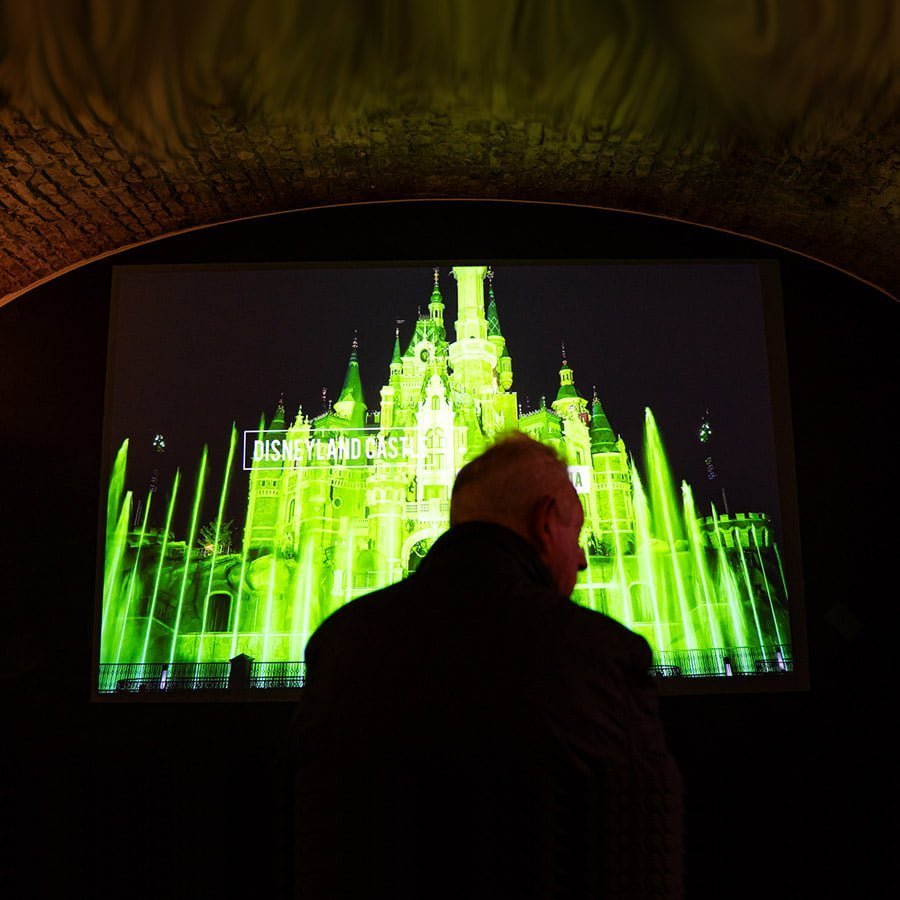
EPIC, the Irish Emigration Museum, located in the heart of Dublin is a beacon of cultural heritage and innovation in Ireland. The museum has been awarded Europe’s Leading Tourist Attraction for three consecutive years: 2019, 2020 and 2021, using projection mapping to enhance visitors’ visits and create an immersive experience.
EPIC has twenty immersive display galleries and explores the narrative of Irish emigration, studying its global cultural impact. The museum is housed within the historical setting of a former customs warehouse, which has been restored to host this innovative and modern exhibition space.
Smarter Surfaces create innovative surface solutions that promote both collaboration and immersive environments. Our range of projector paints are specifically designed to transform any wall into a high-quality projection surface. They were chosen to transform the way stories are told within exhibit spaces. The collaboration between EPIC and Smarter Surfaces aimed to go beyond traditional display limitations, setting a new standard for projection mapping immersive visitor experiences.
Telling Stories in a Unique Space
The EPIC Irish Emigration Museum had a unique challenge. They needed to tell a story and create a truly engaging, immersive experience for their visitors. Traditional screens posed limitations in size and interactivity. This was restricting the museum’s ability to present their stories in the compelling manner they envisioned. The goal was to transform the way visitors interacted with the exhibits through projection mapping, using our projection paints.
As EPIC Museum is housed within an historical structure, we needed to preserve the integrity of the surroundings. At the same time we needed to integrate modern technology. EPIC were looking for a solution that could blend seamlessly with their exhibits. It also needed to get around the constraints imposed by conventional display screens and projectors.
The aim was to create a continuous, uninterrupted visual flow throughout the galleries. This would allow the stories of Irish emigration to naturally unfold within the spaces.
Smarter Surfaces’ Solution
In response to these challenges, the museum turned to Smarter Surfaces. Our cutting-edge projector paints offer an innovative solution for projection mapping. EPIC wanted to use our specially formulated paints to convert the walls of the exhibition space into expansive, high-definition projection mapping surfaces.
Smarter Surfaces product range includes our Ultra High Contrast Projector Screen Paint. It is engineered to enable high-quality projections on any surface and was an ideal fit for EPIC’s requirements. It meant that any area of the museum’s galleries could become a dynamic canvas to tell the story of Irish emigration. The paint can support superior image quality, up to 4k, and wide viewing angles to create the desired immersive experience.
The implementation process involved an application of the projector paints onto the museum’s unique wall surfaces. This required a tailored approach due to the intricate nature of the historical building’s interior architecture. The Smarter Surfaces team worked closely with the museum’s exhibit designers to ensure that the application of the paint would serve its functional purpose for projection mapping, but also maintained the presentation of the exhibits and the space.
This innovative solution provided by Smarter Surfaces enabled EPIC to surpass the limitations of screen size and aspect ratios, offering a versatile and engaging medium that brings the tales of Irish emigration to life. The result was a series of interactive displays that allowed visitors to step into a world where history and technology converge, offering a sensory-rich educational experience.

Surface Setup for Projection Mapping
Measure & Mark: We began by accurately measuring the area intended for the application of the projector paint. After determining the dimensions for the projection mapping areas, any parts not to be painted were masked.
Preparation: Any parts of the exhibit that weren’t being painted were covered. Then, the museum’s walls were prepared to ensure the optimal application of the projector paint. This stage was crucial to achieve a smooth finish that would not distort the projected images. Any imperfections on the surfaces were filled and sanded to create a smooth and flat surface.
Application: Smarter Surfaces’ team then proceeded with the application of the Ultra High Contrast Projector Screen Paint. This paint was selected for its superior reflective qualities and compatibility with the museum’s various lighting conditions to ensure optimal projection mapping.
Calibration: Following the application, we tested and calibrated the installation. EPIC employees state-of-the-art projectors, and the positioning was fine-tuned to maximise the impact of the images and to ensure the projections were clear, bright, and vibrant from every angle of the room.
Integration: The final step involved integrating the new projection surfaces into the museum’s existing exhibition design. This included adjusting the visual content to fit the unconventional shapes and sizes of the painted walls, ensuring a seamless blend between the projection mapping and the physical environment.
Outcome
The outcome of integrating Smarter Surfaces’ projector paints at EPIC The Irish Emigration Museum was immediate. Visitors to the museum were greeted with the large-scale, high-definition projections that bring the history of Irish emigration to life. The innovative use of Smarter Surfaces technology provided a canvas that is more expansive and interactive for projection mapping when compared to traditional display methods.
The museum’s exhibitions were transformed into a continuous visual journey, without the breaks and limitations of physical screens. This immersive experience allowed the stories, images and data to be presented in a manner that was both educational and engaging. Feedback from visitors was overwhelmingly positive, with many expressing amazement at the seamless integration of visual technology into the historical space.
The flexibility of the projection paint means that EPIC can now update and change their projection mapping without being constrained by the size or shape of digital displays, ensuring that the museum remains at the cutting edge of exhibition design.
Future Spaces
The successful collaboration between EPIC The Irish Emigration Museum and Smarter Surfaces has demonstrated that innovative solutions can be seamlessly integrated into heritage environments. The application of Smarter Surfaces’ projector paints at EPIC has not only enhanced visitor engagement but has done so while preserving the historical essence of the museum’s space.
EPIC’s forward-thinking strategy provides a blueprint for how museums and educational spaces can leverage advanced technologies to their advantage. The versatility of Smarter Surfaces’ projection paints present numerous possibilities for its application. These projection paints can overcome traditional spatial constraints, offering new ways to create interactive and compelling narratives within any environment. Architects and designers now have the tools to build with interactivity in mind, envisioning spaces that are built to actively engage people.
At Smarter Surfaces, we think our partnership with EPIC is a testament to the value that our products can bring to exhibition design. Institutions can present their content in novel ways that engage, educate, and endure in the memories of their audiences. It’s not just limited to the heritage sector. Corporate offices, educational facilities, and even retail spaces can adopt this technology to enhance their environments, making walls and surfaces a dynamic element of their interaction with visitors, customers, and employees.
Get In Touch with Us
The product advisors and industry experts at Smarter Surfaces are ready to answer any question you may have regarding whiteboard paints, magnetic paints, wallpapers, and projection paints.
You can book a free video consultation with us where you show us the wall you want to transform, talk to us about your goals, and we will help you find the most effective products for the purpose.

by sefali | Sep 13, 2023 | Blog
Projection screen paint is a key component in creating immersive visual experiences in movie theatres and home theatre setups, but did you know these paints can also be used for acoustically transparent screen? Understanding the science behind these paints is crucial to appreciating their role in preserving sound quality.
In this blog post, we will look into the concept of acoustically transparent screen paint, the importance of the Sound Absorption Coefficient (SAC), and how our paints maintain acoustical transparency.
Are Projection Screen Paints Acoustically Transparent?
Yes, Smarter Surfaces Projection Screen Paints are acoustically transparent and can be used if making an acoustically transparent screen.
These paints are specially formulated to not impede or affect the transmission of sound through the painted scren. The substrate or old material screen will need to be acoustically transparent for it to work properly. This allows for a seamless integration of audio and visual elements, providing an immersive experience for movies, and other multimedia content.
What’s the Significance of the Sound Absorption Coefficient (SAC)?
The Sound Absorption Coefficient (SAC) measures the ability of a material to absorb sound energy as sound waves pass through it. When sound waves encounter a surface, they can be reflected, absorbed, or transmitted. The SAC quantifies the absorption capabilities of a material and is influenced by various factors, including the frequency of the sound waves involved.
Frequency Dependence and SAC
The SAC is frequency-dependent because different sound frequencies have distinct wavelengths, which interact with materials in unique ways. As a result, SAC values are typically represented as a range to account for variations in absorption characteristics across different frequencies.
To illustrate this for our range of projector paints, we conducted tests using a common building material, specifically a 12mm gypsum board, and obtained the following results:
- Unpainted Board α = 0.04-0.07
- Painted Board α = 0.04-0.07
Both the unpainted and painted 12mm gypsum boards exhibited a range of SAC values between 0.04-0.07. These values indicate the level of absorption experienced by the material when sound waves pass through it. Importantly, our acoustic projection screen paints maintain the same range of SAC values as the unpainted board. This means that our projector paint range is acoustically transparent.
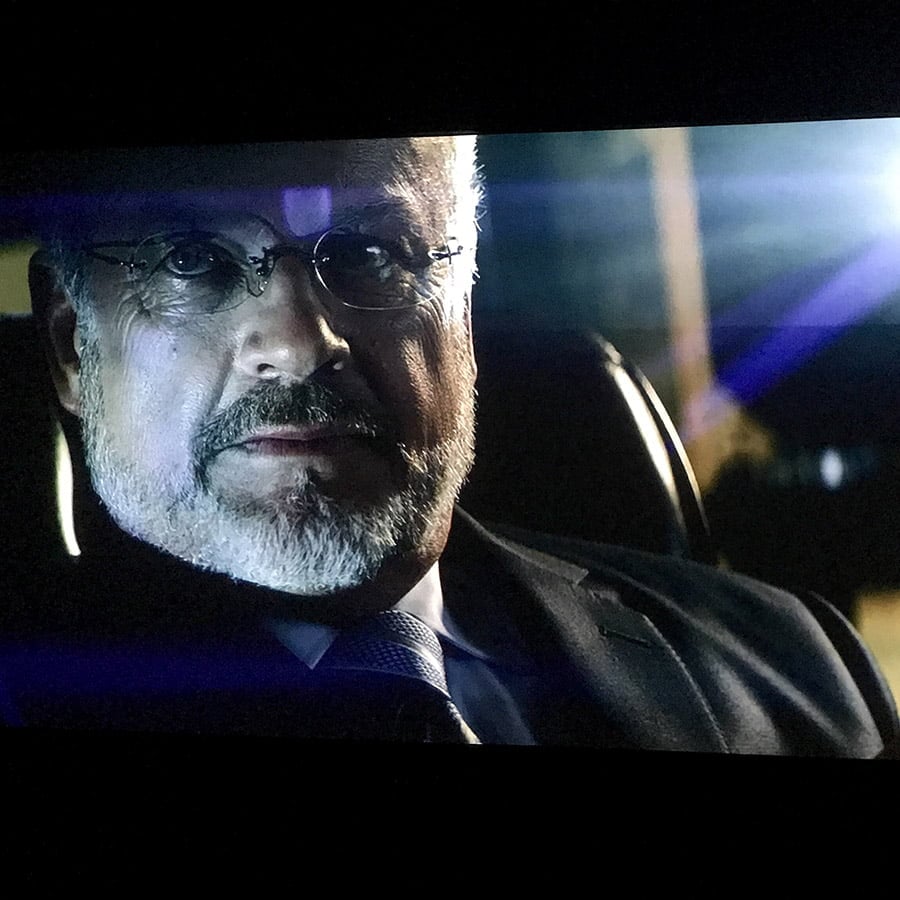
Acoustically Transparent Screen Paints and their Characteristics
In the context of an acoustically transparent screen, it is essential that the paint does not interfere with the passage of sound waves through the screen, preserving the audio quality and ensuring a seamless audiovisual experience.
An acoustically transparent paint will not significantly alter the sound absorption characteristics of the base material. If you’re looking to upgrade an old material screen, for instance turn it into a high contrast screen, our paints won’t affect the base material.
Our paints are specifically formulated to be acoustically transparent, meaning that they maintain the absorption characteristics of the base material, such as the 12mm gypsum board we ran our initial tests on. When applied to a surface, our paint allows sound waves to pass through without causing notable deviations in the SAC values. This ensures that the sound quality remains uncompromised, providing an authentic and immersive audio experience.
Benefits and Applications of Acoustic Projection Screen Paints
The benefits and applications of these paints are numerous and offer significant advantages over traditional projection screens.
Enhanced Audio Fidelity
One of the key benefits of using acoustically transparent paint on a projection screen is the enhanced audio fidelity it provides. Sound waves can pass through the paint without interference, preserving their integrity and resulting in a more realistic and immersive auditory experience.
Traditional screens can sometimes obstruct sound or cause reflections, leading to a loss of audio quality. Acoustic projection screen paints mitigate these issues, ensuring that viewers can fully enjoy the nuances and clarity of the sound.
Versatility
Acoustic projection screen paints can be applied to a variety of surfaces, including material screens, walls, and ceilings, however the substrate also needs to be acoustically transparent. This versatility allows for creative and customised installations in different environments, such as movie theatres.
Cost-effectiveness
Cost-effectiveness is another compelling factor when considering acoustic projection screen paints. Purchasing a dedicated projection screen can be a significant investment, especially for commercial applications or large-scale theatres.
Acoustic projection screen paints provide a cost-effective alternative by transforming any suitable surface into a projection screen. This makes it an attractive option for both personal use and commercial installations, as it eliminates the need for expensive screen purchases while still delivering high-quality audiovisual performance.

by sefali | Sep 13, 2023 | Blog
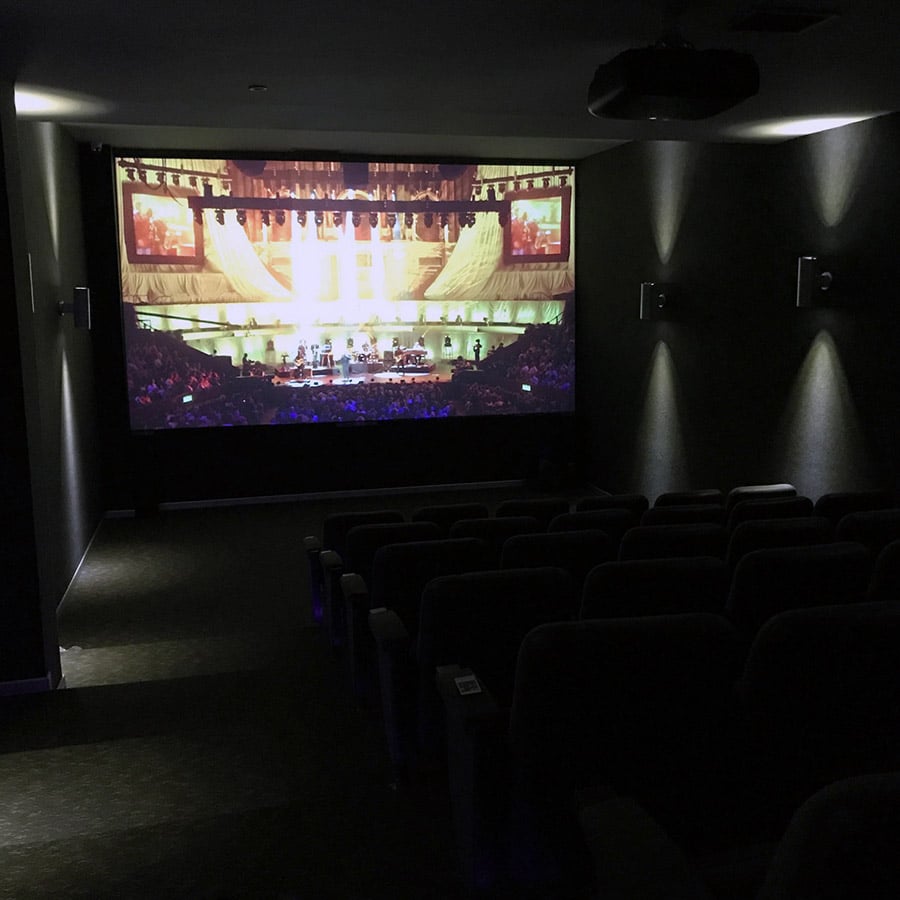
Cinemas and movie theatres have always aimed to provide a captivating and immersive experience for moviegoers. While advanced projection systems and surround sound have enhanced the audiovisual experience, the quality of the projected image itself plays a crucial role.
In recent years, cinema screen paint has emerged as a game-changing solution, allowing cinemas and theatres to transform any suitable surface into a high-performance projection screen.
When choosing a cinema projector screen, gain, contrast, ambient light and surface quality all play a vital role in creating the optimum projection experience. Our projection surface products have been developed to dynamically adjust to these elements with options tailored to the environment you are projecting in.
Smarter Surfaces' Cinema Screen Paint Technology
Our cinema screen paint range was developed with a specialised layering technology to reflect uniform images. This design means they achieve a very smooth finish. This helps ensure pixel clarity, sharpness and uniform brightness, across all the products in the range.
Our projector products have CREST certified performance for application to Surface Finish Quality Standard of EU Level Q4/ US Level 5, guaranteeing a smooth, seamless surface ready for use with a high-quality projector for professional projection results.
Image Quality Optimisation
Image quality optimisation is a key aspect of cinema screen paint that greatly enhances the cinematic experience. These specialised coatings are meticulously formulated to deliver exceptional image fidelity, ensuring that every detail of the movie is faithfully reproduced on the screen.
Colour accuracy is a crucial factor in creating a lifelike and immersive visual experience. Projector paints are engineered to provide excellent colour reproduction, accurately representing the intended hues and shades of the film. Whether it's the vibrant colours of an animated feature or the subtle nuances of a dramatic scene, projector paints ensure that the colours on the screen are vivid, true-to-life, and visually captivating.
Another critical aspect of image quality is contrast. Smarter Surfaces’ range of cinema screen paints are designed to optimise the contrast ratio, with some paints designed to deliver much higher contrast levels. By minimising light reflection and ambient light interference, our projector paints create a darkened viewing environment, allowing for a more pronounced contrast. This results in scenes with greater depth, detail, and visual impact. Whether it's the shadows creeping in a horror film or the dazzling brightness of a sci-fi spectacle, the optimised contrast offered by projector paints enhances the overall viewing experience.
Brightness is also a vital factor in image quality optimisation. Our cinema screen paint was developed to ensure that the projected image remains bright and vibrant, even in environments with ambient light. By minimising light reflection and hotspots, our paints enable the projection to retain its clarity and visibility, allowing viewers to immerse themselves fully in the on-screen action.
High Contrast Cinema Screen Paint
Grey projector paint screens are specifically designed to increase the contrast levels of the reflected image. By absorbing more ambient light compared to a white screen, these grey screens reduce light reflection and enhance the perceived contrast. This results in deeper blacks, richer colours, and improved overall image quality. However, it's important to note that using a grey projector paint screen will require a higher lumen projector to compensate for the light absorption and ensure vibrant colours are not dulled.
For those seeking even greater contrast and intensified black levels, dark grey and black cinema projector screen paints are available. These specialised coatings further enhance the dark areas of the projected image, resulting in a more immersive and visually striking experience. The intensified black levels create a greater sense of depth and dimension, allowing viewers to fully appreciate the details and nuances in dark and shadowy scenes.
It's worth noting that the choice of projector paint screen colour should be made based on the specific requirements of the projection environment and the desired visual effect. Factors such as ambient light, room size, projector capabilities, and personal preferences should be considered when selecting the appropriate contrast-enhancing screen.
By offering high contrast screens in various shades, projector paint technology provides cinemas and movie theatres with the flexibility to tailor their projection surfaces to optimise image quality and create a captivating cinematic experience for their audiences.
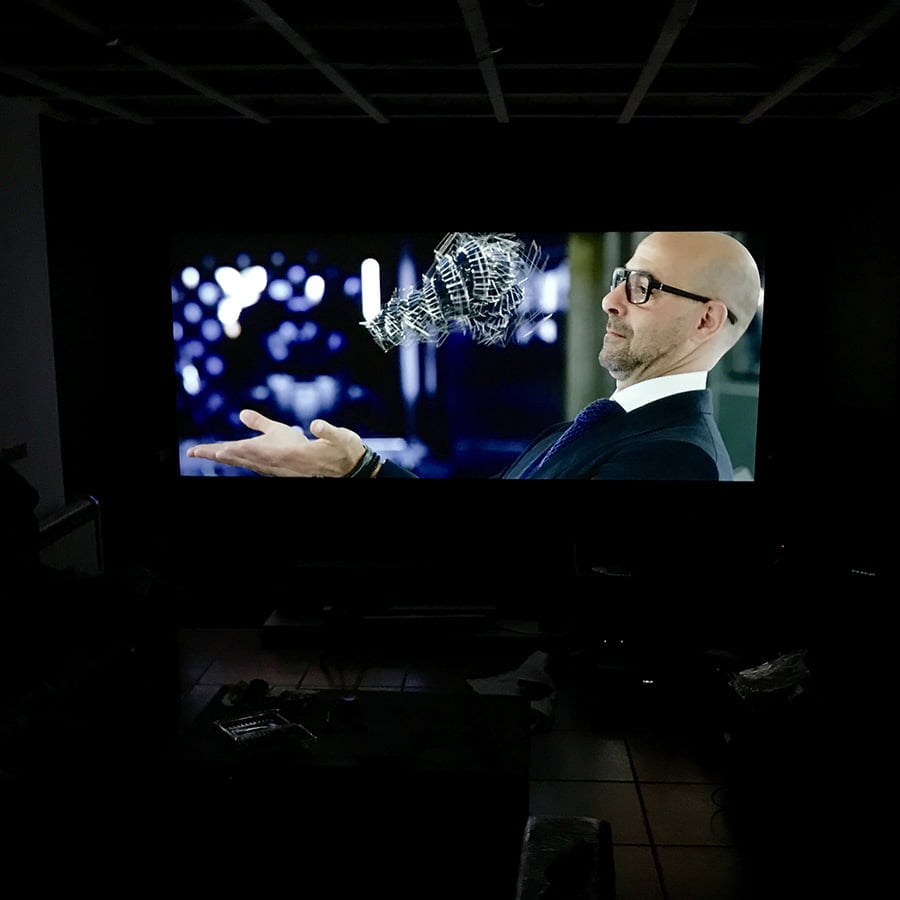
Acoustic Performance of Cinema Screen Paint
Smarter Surfaces cinema screen paints are acoustically transparent and can be used to create acoustically transparent screens. Specifically formulated not to hinder or impact sound transmission through the painted surface, our cinema screen paints necessitate an acoustically transparent substrate or base material for optimal performance.
In the context of an acoustically transparent screen, it is imperative that the paint does not impede the passage of sound waves through the screen, preserving audio quality and facilitating a seamless audiovisual experience. Acoustically transparent paints should not significantly alter the sound absorption characteristics of the base material.
Design Flexibility and Screen Customisation
When it comes to cinemas and movie theatres, one of the standout advantages of projector paints is the flexibility they offer in terms of screen size and shape. Unlike traditional screens that come in fixed dimensions, projector paints can be applied to almost any suitable surface, including walls, ceilings, or even curved surfaces.
This versatility allows cinemas and theatres to adapt their projection area to the available space, maximising seating capacity and optimising the viewing experience for every seat in the house. Additionally, projector paints enable the creation of custom screen sizes, ensuring that the screen perfectly fits the room's dimensions and enhances sightlines for the audience.
Cost-Effectiveness and Scalability
Projector paints offer a cost-effective solution for cinemas and theatres. Compared to traditional screens, projector paints eliminate the need for purchasing expensive screen materials, saving on upfront costs. Additionally, the paints can be reapplied or touched up as needed, extending the lifespan of the projection surface and reducing long-term maintenance expenses. For cinemas with multiple screens or emerging theatres with budget constraints, projector paints provide a scalable option to enhance image quality without significant financial investment.
Installation Simplicity and Maintenance
Installing projector paints is relatively straightforward. The surface needs to be properly prepared, including cleaning, smoothing, and priming, to ensure an optimal projection surface. Once prepared, the paint can be rolled or sprayed onto the surface, allowing for quick and hassle-free application. Projector paints are designed to be durable, capable of withstanding regular cleaning without compromising image quality. However, it is important to note that high-traffic areas may require periodic touch-ups or reapplication to maintain optimal performance.
Considerations for Optimal Performance
To maximise the benefits of projector paints, certain considerations should be taken into account. First, ambient light control is crucial to minimise interference with the projected image. Proper lighting design and the use of light-absorbing materials on walls and ceilings help create a darkened environment for optimal image visibility. Second, the projector itself should be chosen carefully, ensuring compatibility with the projector paint and its specific reflective properties. Lastly, regular calibration of the projection system is recommended to maintain accurate colour reproduction and overall image quality.
Projector paints have revolutionised the cinema and movie theatre industry by offering an innovative, cost-effective, and customisable solution for projection screens. With their ability to optimise image quality, provide design flexibility, and simplify installation and maintenance processes, cinema screen paints have become a valuable tool for enhancing the cinematic experience. Whether it's a blockbuster or an independent film, projector paints play a pivotal role in bringing stories to life on the big screen, captivating audiences and immersing them in a world of imagination.
