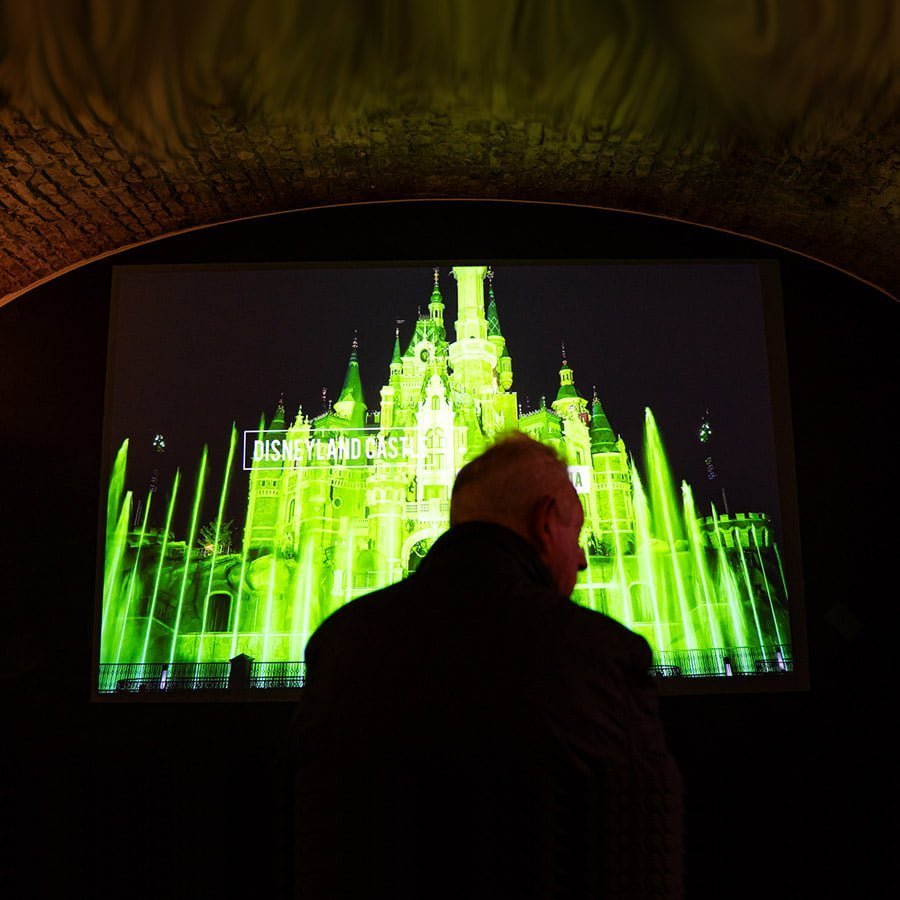
by sefali | Jul 26, 2024 | Blog
It’s not just about the latest blockbuster or the roar of your surround sound, crafting an unparalleled movie experience requires the perfect screen. Our latest launch, Silver Screen Paint for 3D projection is here to ensure that you have the perfect canvas for the magic to unfold.
Following the success of our top-selling ALR Projector Paint and Ultra High-Contrast Projector Screen Paint, we’re excited to unveil Silver Screen Paint. This culmination of years of research by our R&D team is designed to push the boundaries of your home theater experience and all spaces where the highest gain levels are needed.
This comprehensive buyer’s guide delves into the world of Silver Screen Paint. Exploring its unique features and potential to enhance your movie experience to new heights.
What is Silver Screen Paint?
Smarter Surfaces Silver Screen Paint is a 3D projector paint that turns any wall or smooth surface into an ultimate 3D projection screen. Not just the high-end home theaters, this specialized paint is ideal for commercial spaces like — movie halls, museums, galleries, and event arenas too.
What makes it stand out is the ability to reflect an extremely high amount of the projected light. This higher light reflection eliminates any loss in picture quality even in environments with low to medium ambient light. As a result, you get brighter and cleaner images with high depth and clarity.
To achieve this feat, the paint has a high-density of silver particles, capable of reflecting maximum light. This is how it ensures the perfect resolution for 3D projection.
Our Silver Screen Paint can be applied to any wall or smooth surface. You can even use it over old fabric screens to refurbish them. However, it’s not suitable for roll-up screens.
Now that we have a clear idea about the paint and what it does, here’s a lowdown on the key benefits that make it the best choice for high-definition 3D projection.
Why should you spend on Silver Screen Paint?
Whether your 3D projection setup graces a home theater, conference hall, or commercial space, Silver Screen Paint is the perfect complement. Engineered specifically for 3D technology, it unlocks the clarity and effects you crave from a premium projection screen. Let’s check out the key benefits at a glance.
Top 10 benefits:
- Best 3D image in class: Silver Screen Paint boasts a high light reflectivity, acting like a wide-spread mirroring surface for your projector’s light. This translates to crisper images and sharper resolutions, ensuring every detail pops in 3D. Plus, the paint is polarity preserving, meaning the recreated images will have exactly the same polarity as is intended, preserving the complete 3D effect.
- Commercial grade quality: The paint is designed for use with the most powerful 3D projection equipment. It thrives in environments with powerful 3D setups and controlled lighting, making it the perfect fit for home theaters, cinemas, museums, and galleries. The expansive 140-degree viewing angle ensures the best viewing experience from every angle.
- Supports high-definition audio: Our silver screen paint is acoustically transparent. This means, the sound waves can penetrate the screen material with minimum reduction in strength. So, the screen will not diminish sound quality or act as a barrier between the speakers and the audience.
- Adaptable to different lightings: Silver Screen Paint adapts to your environment’s ambient light conditions. Whether you have a completely darkened room for maximum immersion or your space has a touch of ambient light, the paint delivers stunning 3D visuals. It is ideal for completely dark, light-controlled rooms as well as rooms with low to medium ambient light.
- Top-notch projector compatibility: Tested rigorously with industry-standard 3D projectors, Silver Screen Paint guarantees optimal performance. It works seamlessly with HD, 4K, and 8K projectors with a minimum 3000 lumen value from all top manufacturers like Sony, Epson, Christie, Hisense, and Optoma. No more worries about hot spots or a drop in quality — it delivers pure, unadulterated 3D magic.
- Brings effortless elegance: The silver screen paint for projector doesn’t sacrifice aesthetics for performance. Its spray application ensures a smooth, sleek, semi-matte finish that seamlessly integrates into your space, making a statement without stealing the show. It also eliminates the need for any projector screen accessories and saves space.
- Simple application with minimal downtime: The silver paint is spray applied and only 2 coats of the paint on a well-primed surface is all you need to design the screen. It will be ready to use in just 24 hours. So, if prolonged downtime is a concern, this paint is the perfect solution for you.
- Long service for no upkeep: This 3D projector paint doesn’t peel or yellow over time. It gives service for years for minimal maintenance. To keep it clean, just dust off the screen with a dry cloth or wipe it off with a damp cloth once in a while. And it will be as good as new. It even comes with a 5-year guarantee for complete peace of mind.
- Cost-effective: Our silver screen paint delivers better picture quality than most commonly available 3D screens and the cost you pay for it is worth every penny. Also, it costs less compared to large or custom installations of traditional 3D screens.
- Safe and environment friendly: Smarter Surfaces silver screen 3D projector paint is free from harmful solvents, isocyanates and has very low VOC. It exceeds all environmental standards and is completely safe for use in homes and public places.
Wondering if a silver projector screen is better than white? Let us tell you that a high-quality silver screen is always a better choice because it gives more flexibility. Traditional white projector screens struggle with ambient light, washing out details and compromising image quality.
Silver Screen Paint, however, boasts superior light reflectivity, ensuring vibrant, high-resolution 3D visuals even in moderately lit environments. This makes it the ideal choice for those who desire a more flexible viewing experience, without sacrificing image fidelity.
But don’t just take our word for it. Here’s what one of our first customers has to say about the new launch — Silver Screen Paint:
“I’m impressed with the ultra-smooth finish and great image quality. However, it needs a high-quality 3D projector to unlock the full potential of this paint. In my setup, I use an Epson 5050ub, which I believe pairs exceptionally well with the painted screen.
Silver Screen Paint truly shines in environments with low to medium ambient light, particularly when paired with a powerful projector.
The deep silver color of Smarter Surfaces Silver Screen Paint elevates the viewing experience by significantly enhancing image reflection. It’s a game-changer for our home cinema, creating a truly immersive 3D experience.”
Intrigued by the prospect of a phenomenal 3D experience in your own space? We understand the allure. Before you embark on the journey, let’s take a quick look at the Silver Screen Paint application process.
How to apply Silver Screen Paint?
Smarter Surfaces’ silver screen paint for projectors should be spray applied and you’ll need a spray paint gun for it. Detailed recommendations on the type of gun and spray tip size, are available in the application guide provided.
Also, keep in mind, this paint should be spray applied and you’ll need a spray paint gun for it. Detailed recommendations on the type of gun and spray tip size, are available in the application guidelines provided with the paint.
The application has three simple steps — surface preparation, paint application, and curation
Surface preparation
- You need a smooth, clean, and dry surface to begin with. Ensure that it’s free from loose paint or particles. Fill in any gaps or cracks to ensure the surface is even.
- If the surface is bare or untreated, prime it with two coats of Smart White Primer. Let the first coat dry completely before you apply the second.
- Sand the surface lightly with a smooth sandpaper before applying the silver screen paint.
Paint application
- Stir the paint well. Spray the paint evenly on the prepared surface to create the first coat.
- Once this coat is completely dry, spray the second coat. Ensure a minimum wet film thickness of 80 microns in each coat.
Curation
- After both coats have been applied, let the fresh silver screen paint projector surface dry for a minimum of 24 hours before use.
If you have a commercial project that demands a customized silver projection screen, contact us for assistance.
Check out this video for application of our Silver screen paint
Wrapping it up
Silver screen paint is a modern technology-driven projection surface solution designed specifically for high-end 3D projection. The range of benefits it offers surpasses expectations and ensures the highest three-dimensional cinematic experience.
Silver Screen Paint transcends the boundaries of residential applications. Its efficacy extends to grand commercial spaces like museums, cinemas, and galleries, delivering exceptional performance.
Ready to unlock the potential of your 3D setup? Try our silver screen paint and see the difference.

by sefali | Jul 19, 2024 | Blog
Whether you are just starting out in your teaching position or have been shaping students for quite a while, implementing new teaching approaches and strategies in your classrooms is the best option to keep up with the latest trends.
The global education landscape has already undergone a dynamic transformation. To prepare students for an AI-driven future and manage decreasing attention spans, teachers need more than just passive learning and rote memorization.
They need innovative teaching strategies that promote curiosity and cultivate critical thinking. Engaging teaching methods that empower students to become active participants in their own learning journey, is the need of the hour.
In this blog, we will explore some of the most effective teaching approaches and strategies for UAE Schools. We also highlighted some key pointers that you, as a teacher, can consider before introducing a new teaching strategy into your lesson plan.
What are Teaching Strategies and Techniques?
Imagine teaching a classroom full of unique learners – each with their own strengths, weaknesses, and preferred learning styles. Teachers need to focus on unique teaching strategies and techniques.
Strategies are the broad plans that guide the overall structure of a lesson. They encompass the learning objectives, chosen activities, and assessment methods.
Teaching techniques that bring these strategies to life. These include things like group activities, virtual field trips, or interactive simulations. They are the practical actions teachers take within the framework of the chosen strategy.
The ideal teaching strategy depends on a variety of factors. The most effective approach often involves a combination of strategies, tailored to the specific needs of your students and the learning goals you’ve set.

Engaging Teaching Strategies for UAE Schools in 2024
The UAE government has taken commendable strides to establish a robust education system that meets international standards. Collaborations with India and Scotland are some of the key initiatives driving this effort.
The opening of the Central Board of Secondary Education (CBSE) office in the UAE has considerably improved the educational guidance for the many CBSE affiliated schools in the country. Also, the introduction of the International Baccalaureate (BI) program along with other global curriculums are helping UAE students better align with the global educational scale.
It’s important for the teachers to implement approaches that focus on developing a future-ready generation. To maximize learning outcomes, let’s explore five powerful classroom teaching strategies that deliver education in the most effective way.
Active learning
Active learning-oriented teaching approaches and strategies shift the focus from teacher-centered instruction to student-driven education. Reciprocal Questioning, Pause Procedure, and the Muddiest Point technique are some commonly used active learning methods.
In Reciprocal Questioning, students come up with questions on a topic or lesson. This ensures active participation and develops better problem solving skills. The Pause Procedure, on the other hand, suggests taking a break every 10-15 minutes during a lesson. Students can discuss the topic or come up with questions in that span. It helps in better understanding.
The Muddiest Point technique involves writing down the point that seems most confusing, or least clear in a lesson. This helps students to grade their understanding of the topic.
Integrating visualization
The human brain thrives on visuals. Incorporating visualization techniques and interactivity can enhance student comprehension. It also helps in retention of complex information.
Products like Magnetic Projector Screen Whiteboard Wallpaper help you integrate advanced visualization in the classroom. This easy-to-apply wallcovering works as a magnetic whiteboard. You can write on it with a normal dry erase marker and also stick notes or images with neo magnets. To top it all, the same magnetic whiteboard works as a high-end projector screen helping you create immersive classroom experiences.
You can use it for creating virtual field trips or short video lessons to ensure better understanding and information retention. Integrating visualization techniques improves memory recall, helps in deeper understanding of complex concepts, and encourages creativity. Interactive walls can replace the whiteboard for schools and make the classrooms a more engaging space for students.
Personalizing the learning journey
In today’s diverse classrooms, a one-size-fits-all approach doesn’t work. Personalized learning allows educators to tailor instructions and activities to meet individual student needs and learning styles.
Differentiated instruction and use of ed-tech to design personalized learning environments are the highlights of this one of the most effective teaching strategies.
Differentiated instruction involves adapting lesson plans, activities, and assessments to cater to different learning paces, strengths, and weaknesses. Teachers might provide additional assistance for struggling students, offer enrichment materials for advanced learners, or create diverse learning pathways within a single lesson.
Adaptive learning software utilizes algorithms to understand and adjust content difficulty based on student performance. This personalized approach ensures students are challenged without becoming discouraged, promoting a sense of accomplishment and love for learning.
Collaborative learning
Collaboration isn’t just about completing tasks together. It’s about fostering communication, teamwork, and social skills that are essential for success in life.
Working collaboratively on group projects teaches students how to effectively communicate ideas, delegate tasks, and resolve conflicts – all while achieving a common goal. Teaching techniques like Jigsaw or Think-Pair-Share are extremely helpful for collaborative learning.
In Jigsaw, students become “experts” on assigned sections of a topic, then teach those sections to classmates from different expert groups. According to Think-Pair-Share, students first think individually about a question or problem, then pair up to discuss their ideas, and finally share their combined thoughts.
These collaborative learning strategies make learning and memorization easier and help to develop critical thinking through peer interaction.
Gamification in education
Imagine learning that feels like playing a game? Gamification incorporates game-like elements such as points, badges, and leaderboards to make learning fun and engaging: Something as simple as a magnetic whiteboard can help you introduce this engaging teaching method in your classroom.
Interactive educational games can transform passive learning into active participation. Students can solve puzzles, complete quests, or compete against each other to acquire knowledge and hone skills.
You can take a step further and explore the different gamified learning platforms that integrate game mechanics into the learning process, allowing students to earn rewards for completing tasks, mastering concepts, or demonstrating progress.

National Innovation Strategy: a guide for UAE educators
The UAE government is making education a priority for all citizens. They’ve launched programs like the UAE National Innovation Strategy to make the country a leader in new ideas. STEM (science, technology, engineering, and mathematics) education is also gaining quick popularity as it creates a highly skilled workforce capable of competing at a global scale.
To improve the quality of education, the UAE government has also launched initiatives like the Abu Dhabi Education Council’s School Improvement Program.
By embracing innovative teaching strategies, we can create a brighter future for the country. But, selecting the most effective teaching techniques and strategies needs careful consideration. It’s best to use a step-by-step framework that considers several key factors as discussed next.
- Learning objectives: What specific knowledge or skills do you want students to gain? Project-based learning might be ideal for fostering problem-solving in science, while a Think-Pair-Share strategy could spark critical thinking in social studies.
- Student needs: Consider age, learning styles, and prior knowledge of your students. Differentiated instruction allows you to tailor the strategy to cater to individual needs.
- Subject matter: Different subjects may have better-suited strategies. Simulations can enhance science learning, while open discussions might be more effective for literature appreciation.
- Available resources: What technology, materials, and space are readily available in your classroom? Interactive projector screens will enhance presentations, while a gamified app could be a fun learning tool.
Remember, the best teaching strategy is a dynamic one. Ongoing evaluation of student progress allows you to adapt and adjust your approach as needed to ensure optimal learning for all.
Level up your classrooms with Smarter Surfaces
To implement the best teaching methodologies and strategies, you need a classroom with advanced tools. Innovative classroom surface solutions from Smarter Surfaces can help you design a modern classroom without stretching the budget.
Products like Magnetic whiteboard projector wallpaper, Interactive Projector Screen Paint and our best selling Whiteboard paint can quickly transform any classroom. They provide the perfect platform for delivering truly engaging and interactive lessons.
The best thing, they are budget-friendly, long lasting, and have a minimum installation downtime. Plus, these surface solutions don’t need much maintenance or special care. To learn more about transforming your classrooms to implement modern teaching strategies, contact our team of experts, join our education programme or book a free video call now.

by sefali | Sep 13, 2023 | Blog
Projection screen paint is a key component in creating immersive visual experiences in movie theatres and home theatre setups, but did you know these paints can also be used for acoustically transparent screen? Understanding the science behind these paints is crucial to appreciating their role in preserving sound quality.
In this blog post, we will look into the concept of acoustically transparent screen paint, the importance of the Sound Absorption Coefficient (SAC), and how our paints maintain acoustical transparency.
Are Projection Screen Paints Acoustically Transparent?
Yes, Smarter Surfaces Projection Screen Paints are acoustically transparent and can be used if making an acoustically transparent screen.
These paints are specially formulated to not impede or affect the transmission of sound through the painted scren. The substrate or old material screen will need to be acoustically transparent for it to work properly. This allows for a seamless integration of audio and visual elements, providing an immersive experience for movies, and other multimedia content.
What’s the Significance of the Sound Absorption Coefficient (SAC)?
The Sound Absorption Coefficient (SAC) measures the ability of a material to absorb sound energy as sound waves pass through it. When sound waves encounter a surface, they can be reflected, absorbed, or transmitted. The SAC quantifies the absorption capabilities of a material and is influenced by various factors, including the frequency of the sound waves involved.
Frequency Dependence and SAC
The SAC is frequency-dependent because different sound frequencies have distinct wavelengths, which interact with materials in unique ways. As a result, SAC values are typically represented as a range to account for variations in absorption characteristics across different frequencies.
To illustrate this for our range of projector paints, we conducted tests using a common building material, specifically a 12mm gypsum board, and obtained the following results:
- Unpainted Board α = 0.04-0.07
- Painted Board α = 0.04-0.07
Both the unpainted and painted 12mm gypsum boards exhibited a range of SAC values between 0.04-0.07. These values indicate the level of absorption experienced by the material when sound waves pass through it. Importantly, our acoustic projection screen paints maintain the same range of SAC values as the unpainted board. This means that our projector paint range is acoustically transparent.
Acoustically Transparent Screen Paints and their Characteristics
In the context of an acoustically transparent screen, it is essential that the paint does not interfere with the passage of sound waves through the screen, preserving the audio quality and ensuring a seamless audiovisual experience.
An acoustically transparent paint will not significantly alter the sound absorption characteristics of the base material. If you’re looking to upgrade an old material screen, for instance turn it into a high contrast screen, our paints won’t affect the base material.
Our paints are specifically formulated to be acoustically transparent, meaning that they maintain the absorption characteristics of the base material, such as the 12mm gypsum board we ran our initial tests on. When applied to a surface, our paint allows sound waves to pass through without causing notable deviations in the SAC values. This ensures that the sound quality remains uncompromised, providing an authentic and immersive audio experience.
Benefits and Applications of Acoustic Projection Screen Paints
The benefits and applications of these paints are numerous and offer significant advantages over traditional projection screens.
Enhanced Audio Fidelity
One of the key benefits of using acoustically transparent paint on a projection screen is the enhanced audio fidelity it provides. Sound waves can pass through the paint without interference, preserving their integrity and resulting in a more realistic and immersive auditory experience.
Traditional screens can sometimes obstruct sound or cause reflections, leading to a loss of audio quality. Acoustic projection screen paints mitigate these issues, ensuring that viewers can fully enjoy the nuances and clarity of the sound.
Versatility
Acoustic projection screen paints can be applied to a variety of surfaces, including material screens, walls, and ceilings, however the substrate also needs to be acoustically transparent. This versatility allows for creative and customised installations in different environments, such as movie theatres.
Cost-effectiveness
Cost-effectiveness is another compelling factor when considering acoustic projection screen paints. Purchasing a dedicated projection screen can be a significant investment, especially for commercial applications or large-scale theatres.
Acoustic projection screen paints provide a cost-effective alternative by transforming any suitable surface into a projection screen. This makes it an attractive option for both personal use and commercial installations, as it eliminates the need for expensive screen purchases while still delivering high-quality audiovisual performance.

by sefali | Sep 13, 2023 | Blog
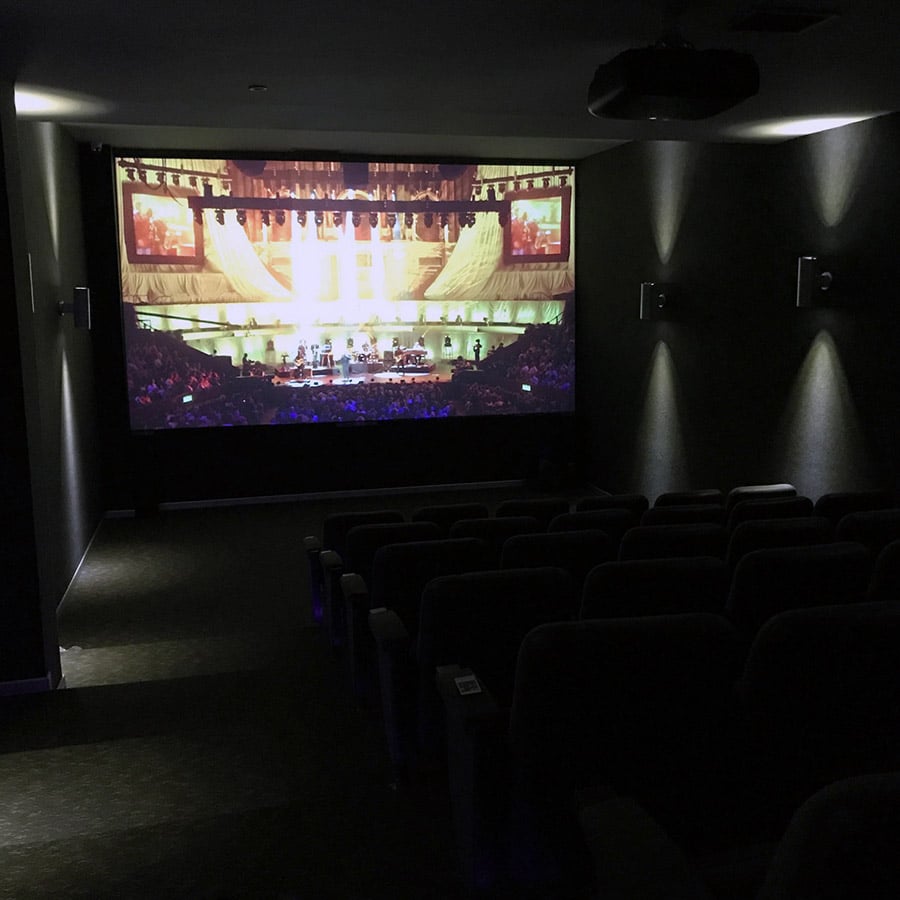
Cinemas and movie theatres have always aimed to provide a captivating and immersive experience for moviegoers. While advanced projection systems and surround sound have enhanced the audiovisual experience, the quality of the projected image itself plays a crucial role.
In recent years, cinema screen paint has emerged as a game-changing solution, allowing cinemas and theatres to transform any suitable surface into a high-performance projection screen.
When choosing a cinema projector screen, gain, contrast, ambient light and surface quality all play a vital role in creating the optimum projection experience. Our projection surface products have been developed to dynamically adjust to these elements with options tailored to the environment you are projecting in.
Smarter Surfaces' Cinema Screen Paint Technology
Our cinema screen paint range was developed with a specialised layering technology to reflect uniform images. This design means they achieve a very smooth finish. This helps ensure pixel clarity, sharpness and uniform brightness, across all the products in the range.
Our projector products have CREST certified performance for application to Surface Finish Quality Standard of EU Level Q4/ US Level 5, guaranteeing a smooth, seamless surface ready for use with a high-quality projector for professional projection results.
Image Quality Optimisation
Image quality optimisation is a key aspect of cinema screen paint that greatly enhances the cinematic experience. These specialised coatings are meticulously formulated to deliver exceptional image fidelity, ensuring that every detail of the movie is faithfully reproduced on the screen.
Colour accuracy is a crucial factor in creating a lifelike and immersive visual experience. Projector paints are engineered to provide excellent colour reproduction, accurately representing the intended hues and shades of the film. Whether it's the vibrant colours of an animated feature or the subtle nuances of a dramatic scene, projector paints ensure that the colours on the screen are vivid, true-to-life, and visually captivating.
Another critical aspect of image quality is contrast. Smarter Surfaces’ range of cinema screen paints are designed to optimise the contrast ratio, with some paints designed to deliver much higher contrast levels. By minimising light reflection and ambient light interference, our projector paints create a darkened viewing environment, allowing for a more pronounced contrast. This results in scenes with greater depth, detail, and visual impact. Whether it's the shadows creeping in a horror film or the dazzling brightness of a sci-fi spectacle, the optimised contrast offered by projector paints enhances the overall viewing experience.
Brightness is also a vital factor in image quality optimisation. Our cinema screen paint was developed to ensure that the projected image remains bright and vibrant, even in environments with ambient light. By minimising light reflection and hotspots, our paints enable the projection to retain its clarity and visibility, allowing viewers to immerse themselves fully in the on-screen action.
High Contrast Cinema Screen Paint
Grey projector paint screens are specifically designed to increase the contrast levels of the reflected image. By absorbing more ambient light compared to a white screen, these grey screens reduce light reflection and enhance the perceived contrast. This results in deeper blacks, richer colours, and improved overall image quality. However, it's important to note that using a grey projector paint screen will require a higher lumen projector to compensate for the light absorption and ensure vibrant colours are not dulled.
For those seeking even greater contrast and intensified black levels, dark grey and black cinema projector screen paints are available. These specialised coatings further enhance the dark areas of the projected image, resulting in a more immersive and visually striking experience. The intensified black levels create a greater sense of depth and dimension, allowing viewers to fully appreciate the details and nuances in dark and shadowy scenes.
It's worth noting that the choice of projector paint screen colour should be made based on the specific requirements of the projection environment and the desired visual effect. Factors such as ambient light, room size, projector capabilities, and personal preferences should be considered when selecting the appropriate contrast-enhancing screen.
By offering high contrast screens in various shades, projector paint technology provides cinemas and movie theatres with the flexibility to tailor their projection surfaces to optimise image quality and create a captivating cinematic experience for their audiences.
Acoustic Performance of Cinema Screen Paint
Smarter Surfaces cinema screen paints are acoustically transparent and can be used to create acoustically transparent screens. Specifically formulated not to hinder or impact sound transmission through the painted surface, our cinema screen paints necessitate an acoustically transparent substrate or base material for optimal performance.
In the context of an acoustically transparent screen, it is imperative that the paint does not impede the passage of sound waves through the screen, preserving audio quality and facilitating a seamless audiovisual experience. Acoustically transparent paints should not significantly alter the sound absorption characteristics of the base material.
Design Flexibility and Screen Customisation
When it comes to cinemas and movie theatres, one of the standout advantages of projector paints is the flexibility they offer in terms of screen size and shape. Unlike traditional screens that come in fixed dimensions, projector paints can be applied to almost any suitable surface, including walls, ceilings, or even curved surfaces.
This versatility allows cinemas and theatres to adapt their projection area to the available space, maximising seating capacity and optimising the viewing experience for every seat in the house. Additionally, projector paints enable the creation of custom screen sizes, ensuring that the screen perfectly fits the room's dimensions and enhances sightlines for the audience.
Cost-Effectiveness and Scalability
Projector paints offer a cost-effective solution for cinemas and theatres. Compared to traditional screens, projector paints eliminate the need for purchasing expensive screen materials, saving on upfront costs. Additionally, the paints can be reapplied or touched up as needed, extending the lifespan of the projection surface and reducing long-term maintenance expenses. For cinemas with multiple screens or emerging theatres with budget constraints, projector paints provide a scalable option to enhance image quality without significant financial investment.
Installation Simplicity and Maintenance
Installing projector paints is relatively straightforward. The surface needs to be properly prepared, including cleaning, smoothing, and priming, to ensure an optimal projection surface. Once prepared, the paint can be rolled or sprayed onto the surface, allowing for quick and hassle-free application. Projector paints are designed to be durable, capable of withstanding regular cleaning without compromising image quality. However, it is important to note that high-traffic areas may require periodic touch-ups or reapplication to maintain optimal performance.
Considerations for Optimal Performance
To maximise the benefits of projector paints, certain considerations should be taken into account. First, ambient light control is crucial to minimise interference with the projected image. Proper lighting design and the use of light-absorbing materials on walls and ceilings help create a darkened environment for optimal image visibility. Second, the projector itself should be chosen carefully, ensuring compatibility with the projector paint and its specific reflective properties. Lastly, regular calibration of the projection system is recommended to maintain accurate colour reproduction and overall image quality.
Projector paints have revolutionised the cinema and movie theatre industry by offering an innovative, cost-effective, and customisable solution for projection screens. With their ability to optimise image quality, provide design flexibility, and simplify installation and maintenance processes, cinema screen paints have become a valuable tool for enhancing the cinematic experience. Whether it's a blockbuster or an independent film, projector paints play a pivotal role in bringing stories to life on the big screen, captivating audiences and immersing them in a world of imagination.
by sefali | Aug 12, 2023 | Blog
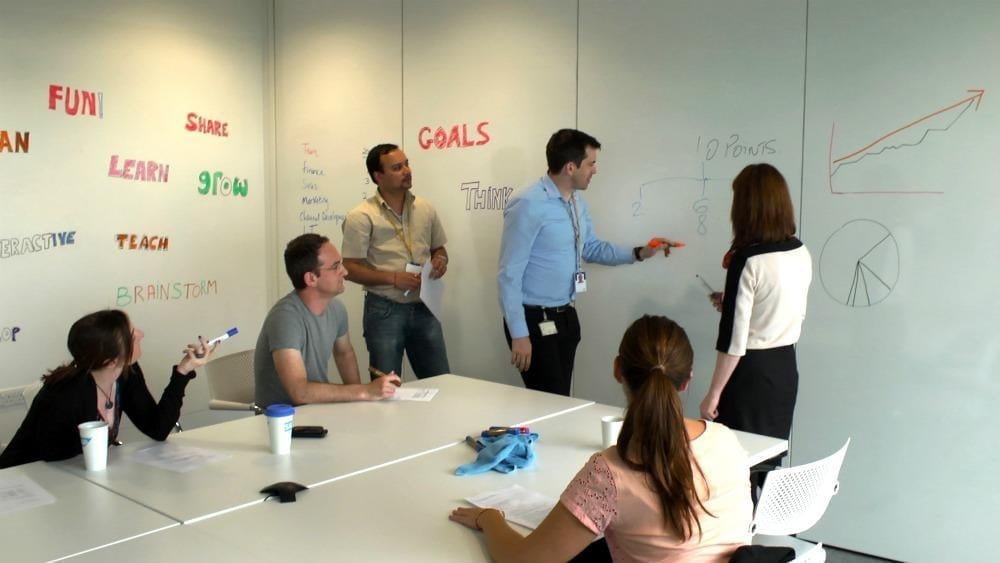
The workplace is more than just a space where people gather to work. It’s a living, breathing entity that greatly influences employee productivity, morale, and job satisfaction. This is why modern office design trends have dramatically evolved over the past few years. Gone are the days when the primary focus was just to fit desks and computers into a room. Today, innovative office designs aim to create environments that not only look aesthetically pleasing but also make employees feel comfortable and motivated. Let’s dive into some of the latest trends you should consider for a modern, efficient workplace.
The transformation of office spaces over the years is nothing short of dramatic. The latest wave of modern office design trends promises a blend of aesthetics and functionality, designed to boost not just productivity but also employee well-being. From adaptable workspaces to eco-friendly design elements, modern office design trends are redefining what an office can be.
The Evolving Concept of Modern Office Design Trends
The concept of “office” has come a long way from cubicles and fluorescent lighting. With technological advances and shifting work dynamics, the modern office is no longer a one-size-fits-all proposition. This evolution has made room for diversity in design, introducing elements that cater to the varied needs of a multi-generational workforce.
What Modern Office Design Trends Should You Be Considering?
It’s not just about filling a room with furniture anymore; it’s about filling it with purpose. One of the trends we are seeing is heavily focused on creating multifunctional, agile workspaces that adapt to the tasks at hand. This involves a thoughtful approach to everything from color schemes to technological integrations. Sustainability and mental health have also gained prominence.
The Role of Technology
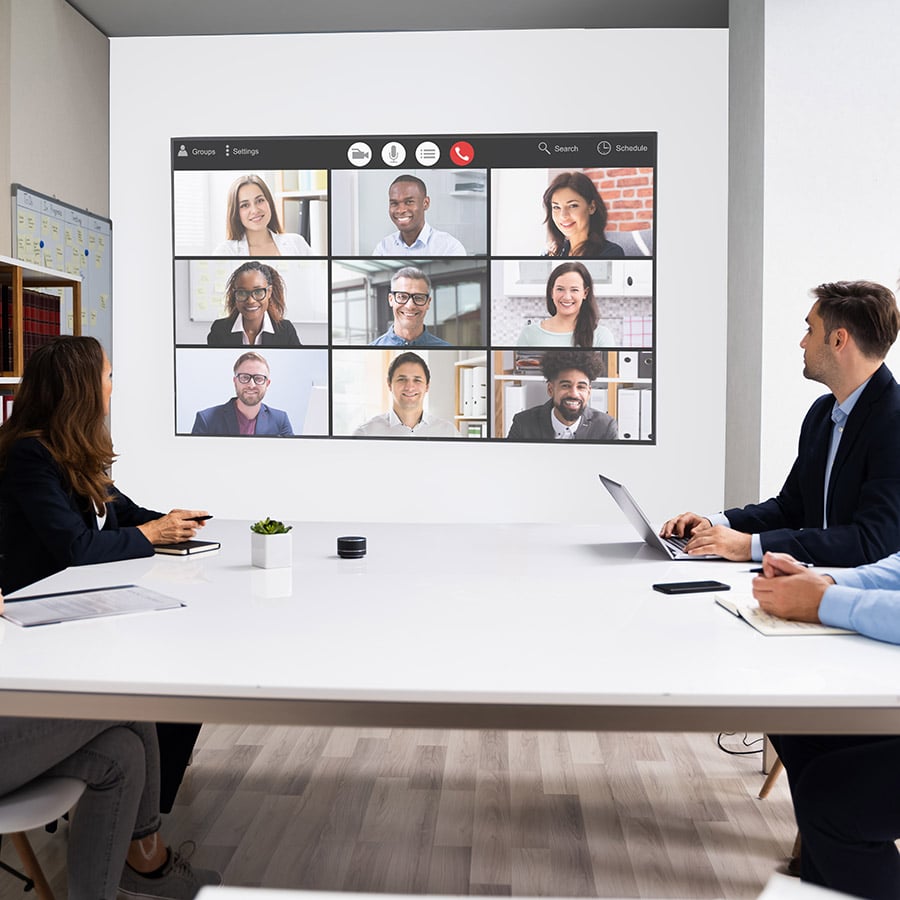
The increasing role of technology in modern office design cannot be overstated. Interactive whiteboards, virtual conferencing facilities, and even AI-based automation tools are becoming integral to a modern workspace. These tools don’t just enable work; they redefine how it is done, breaking down geographical and temporal barriers.
You Can Utilise Color to Improve Productivity
Color psychology plays a pivotal role in affecting mood and productivity. Gone are the days of monochrome or dull color schemes that serve as mere backdrops. Current modern office design trends indicate vibrant, thoughtful color palettes designed to elicit specific responses.
The Science Behind Colors
Various studies have indicated that colors can have psychological impacts that go beyond mere aesthetics. Studies have shown that colors don’t just change our moods but can actually impact our productivity for better and for worse. For instance, blues and greens are generally associated with a calming effect and can improve focus and efficiency. Reds can trigger excitement and energy but need to be used sparingly to avoid inducing stress. Yellows can stimulate creativity but might be overwhelming if overused.
Interactive Color Choices
Companies are increasingly involving employees in color choices, either through consultations or interactive sessions. This inclusion ensures that the selected palette not only aligns with the company’s brand but also resonates with the people who work there.
Make Your Office More Eco-Friendly
Going green is more than just a buzzword; it’s become a corporate responsibility. We’ve seen an exponential increase in the adoption of eco-friendly designs and practices. This involves a range of strategies from energy-efficient lighting to sustainable materials.
Material Matters
The choice of materials plays a significant role in creating a sustainable office. Options like recycled fabrics, sustainable woods, and even modular furniture made from eco-friendly materials are not just trendy but responsible. When choosing paints, you will want to make sure they are low VOC, and solvent free, PFOA, PFOS and isocyanates free. This ensures they are safe to apply with people in the room. All the whiteboard, magnetic and projection paints in our range exceed all these US standards. You can view our full range of functional paints to see what might work on the walls of your office.
Small Steps, Big Impact
Simple measures like opting for reusable coffee cups in the cafeteria or encouraging public transportation can amplify a company’s sustainability efforts. These steps may seem small but have a lasting impact when adopted collectively.
Modern Office Design Trends That Better Fit the Modern Working World
Flexibility is Key
The modern office is increasingly becoming a hub for collaboration and innovation. Flexibility, both in terms of physical space and work policies, is the cornerstone of the modern working world. Here, the office design must cater to different working styles, encouraging both teamwork and individual focus.
Co-working Spaces and Privacy Pods
Open-plan offices and co-working spaces can facilitate collaboration, but they might also cause distractions. The solution is an adaptive design featuring space dividers, privacy pods, and even dedicated “deep work” rooms. These spaces cater to different needs, allowing employees to choose where and how they work best.
Well-being Centric Spaces
Another key trend is designing for well-being. Relaxation zones, standing desks, ergonomic chairs, and even nap pods are cropping up in modern offices. Plants are also being incorporated as they can reduce stress and enhance air quality.
Lighting: The Overlooked Element
Natural light is perhaps the most underrated design element. A well-lit office can uplift employee mood, improve focus, and contribute to overall well-being. Businesses are increasingly adopting smart lighting solutions that adjust based on the time of day, optimizing both energy use and employee comfort.
What Should a Modern Office Look Like?
Modern office design trends are moving towards a blend of functional and inspiring design elements. The idea is to strike a balance between collaborative spaces and individual workstations, between open layouts and private rooms.
Functional Surfaces
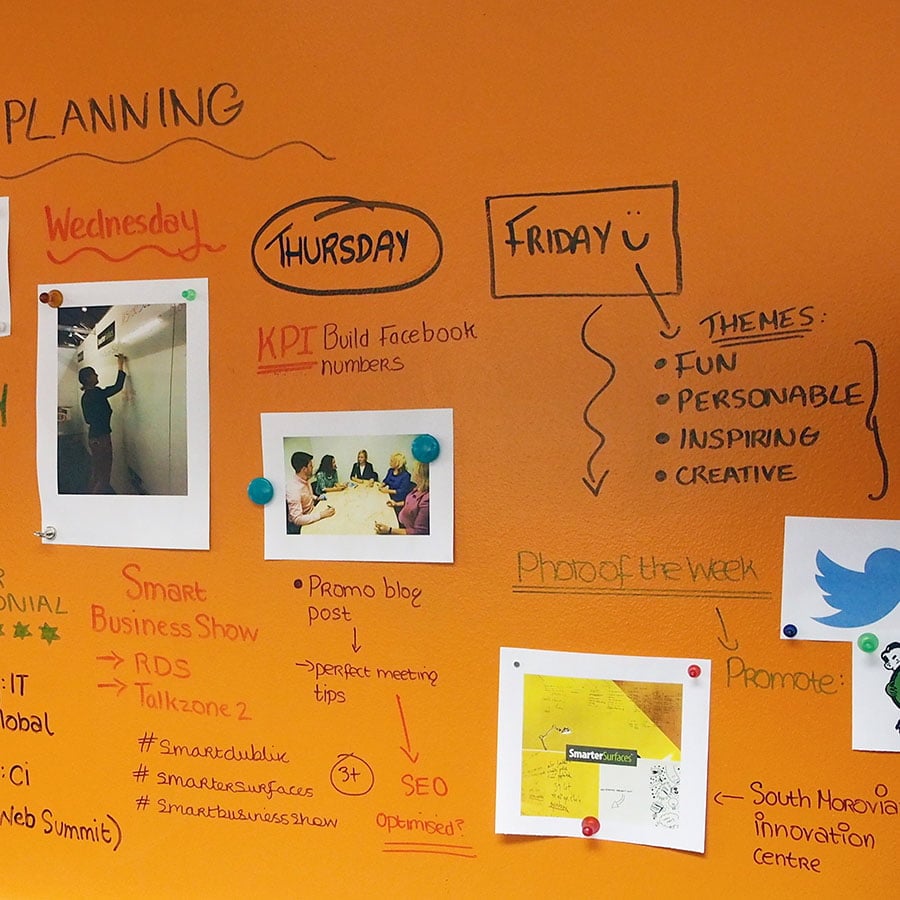
Walls are not just borders; they are functional surfaces. Products like Matte Whiteboard Paint and Magnetic Projector Screen Whiteboard Wallpapers are perfect examples of how surface utility can be maximized.
Dynamic Workspaces
Dynamic workspaces are the newest addition to office design types. These are spaces that can be easily reconfigured to serve multiple purposes. With products like modular furniture and functional surfaces, an office can quickly adapt to whatever the task at hand demands.
How Do I Modernize My Office?
The first step in modernizing your office is to assess your current setup and identify areas that need improvement. Whether it’s the color scheme, furniture, or lighting, each element should be evaluated to ensure it meets current needs and future demands.
Budget-Friendly Upgrades
Modernizing your office doesn’t necessarily mean a complete overhaul. Small, budget-friendly upgrades like new paint, ergonomic chairs, or even some indoor plants can make a big difference.
Consult Your Team
Before making any significant changes, it’s a good idea to consult your team. After all, they are the ones who will be using the space. Surveys or suggestion boxes can provide valuable insights into what improvements are most desired.
Modern office design trends are focused on creating holistic spaces that cater to both work and well-being. Incorporating elements like dynamic workspaces, functional surfaces, and well-being-centric designs can result in an environment where employees not only work but thrive.
So, are you ready to transform your office into a space of the future?

by sefali | Oct 19, 2020 | Blog
Looking to create a projection surface but overwhelmed with choices? You’re not alone. In this projector screen vs paint showdown, we’ll look at the world of projector options to help you make the best decision.
What Can Projection Paint Be Used For?
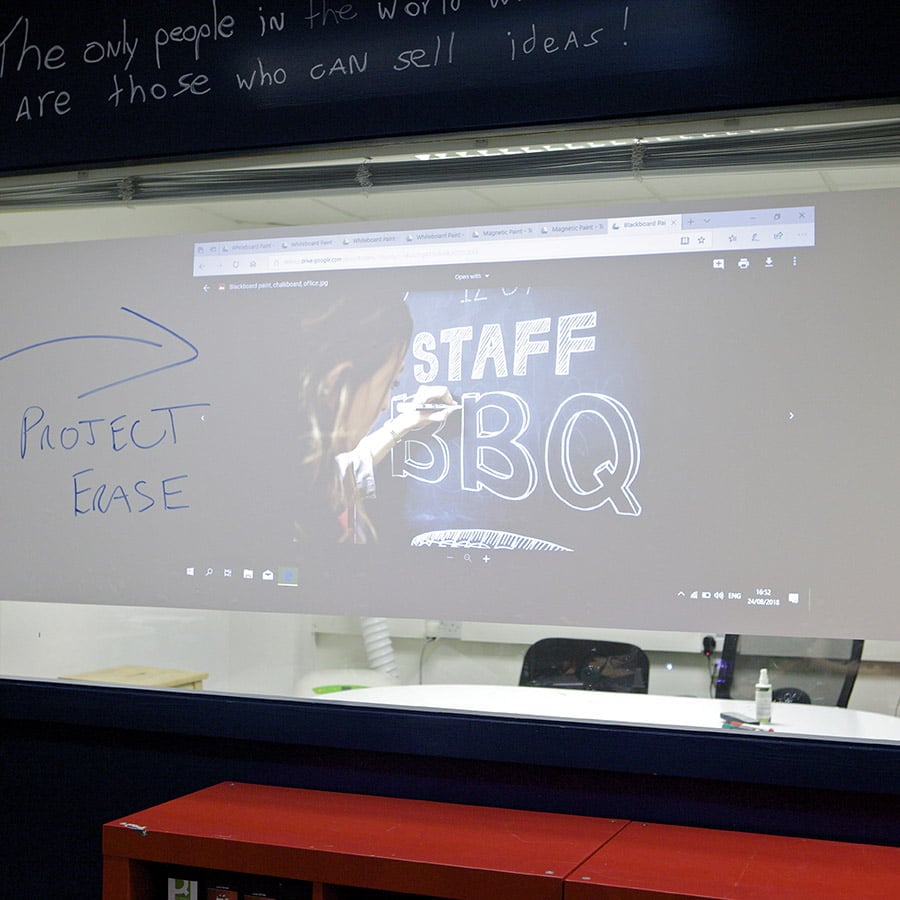
Projection paint is more versatile than you might think. Whether it’s an office, classroom, or your home, projection paint can transform traditional walls into interactive spaces. You can use projector screen paints to turn your office partitions, classroom walls, or even home walls into surfaces perfect for projecting in reduced ambient lighting.
Is It Better to Paint the Wall or Use a Screen for a Projector?
When it comes to projector screen vs paint, the answer may surprise you. While traditional screens have been the go-to choice for years, projection paint offers an innovative and flexible alternative. Using Projector Screen Paint for Offices and Classrooms allows you to customize your projection area size and shape, offering greater flexibility for various room dimensions. This makes it a perfect solution for rooms that have unique configurations or multiple-use purposes, particularly in offices and classrooms.
White Projector Screen Paint Pro offers superior performance with its certified gain value of 1.24, making it ideal for spaces where top-notch projection quality is required.
Can I Use Paint as a Projector Screen?
Absolutely, yes. Products like Ambient Light Rejecting Projector Screen Paint are designed specifically to act as projector screens. They come with benefits like Advanced Ambient Light Rejection, which resists unwanted light, and Enhanced Picture Reproduction, providing luminous, high-definition images. What’s more, you get the ease of paint application to transform any wall into a functional projector screen.
What Are the Differences Between Various Projector Screen Paints?
While regular white paint has a gain value of 1, Smart Projector Screen Paint Pro ups the game with a gain value of 1.1. This difference in gain value means that the Pro version reflects more light, thereby offering a sharper and higher definition projection.
Then there’s Black Projector Screen Paint, designed to absorb ambient light and deliver enhanced image contrast. This is ideal for commercial projection settings or home theaters where powerful, high lumen projectors are in use.
If you prefer a more discreet approach that doesn’t change your room’s aesthetic, Smart Clear Projector Screen Paint is your go-to. This transparent coating optimizes projection performance without altering the existing wall color, making it ideal for those who wish to maintain room design continuity.
Is Projector Screen Paint Worth It?
When weighing the benefits of projector screen vs paint, the value offered by projector screen paint becomes evident. Whether you opt for Outdoor Projector Screen Paint for your garden movie nights or Smart Ultra High Contrast Projector Screen Paint for an enhanced home theatre and gaming experience, the benefits are multifaceted.
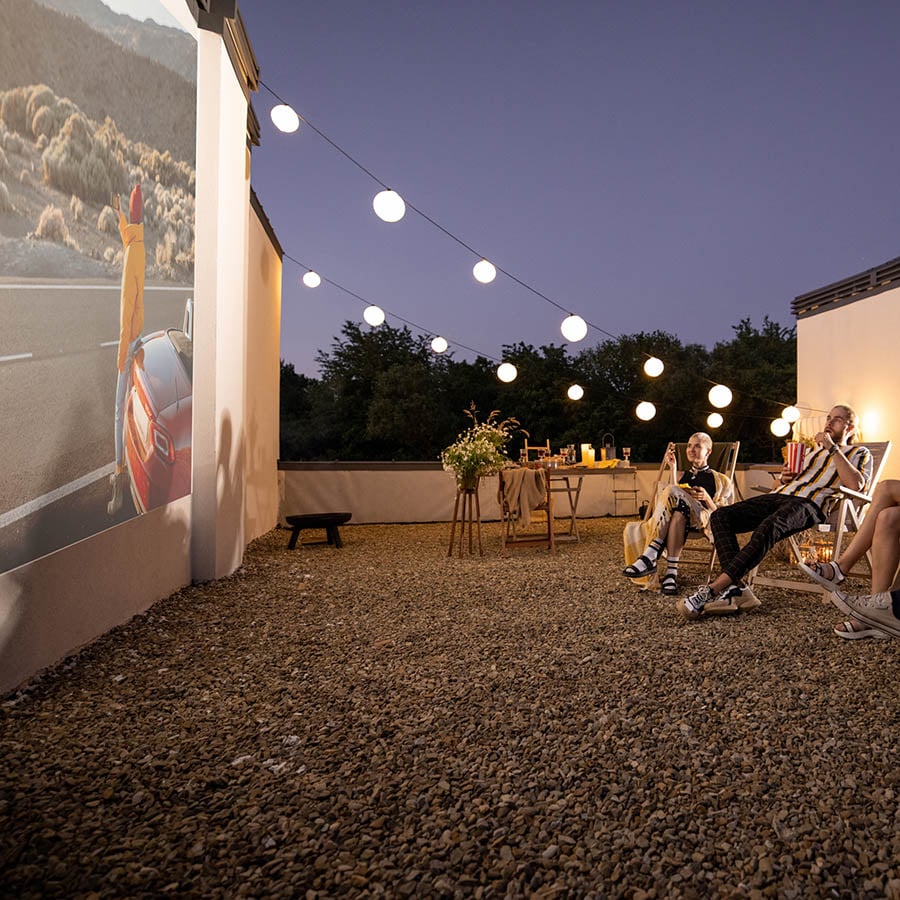
For instance, Smart Ultra High Contrast Projector Screen Paint offers deep black levels, high contrast, and is perfect for low ambient lighting conditions. If you’re an enthusiast for visual quality, then it’s worth the investment.
Is a Projector Screen Better Than a White Wall?
A plain white wall may suffice for casual use but will lack the features like enhanced picture reproduction or ambient light rejection that specialized projector screen paint can offer. Products like Short Throw Projector Screen Paint are tested for maximum projection quality and are specifically designed for environments requiring short-throw projectors. This brings us back to the projector screen vs paint debate—why settle for a simple wall when you can optimize your experience?
Outdoor and Specialized Solutions
For those interested in outdoor screenings, Smart Outdoor Projector Screen Paint offers weather, UV, and crack resistance, making it suitable for long-lasting outdoor use. When it comes to projector screen vs paint for outdoor use, specialized paint like this provides the flexibility and durability that traditional screens may not offer.
Smart Short Throw Projector Screen Paint is another specialized solution for those using ultra-short-throw projectors. The paint allows for clear pixel resolution up to 4K Ultra HD, making it ideal for professional settings requiring high-definition projections.
Ease of Application
Ease of application is another factor that tilts the scale in favor of projector screen vs paint. Products like Clear Projector Screen Paint come with a simple two-coat system, allowing anyone to transform a wall into a projector screen with minimal effort. This ease of use is found across the range, from Black Projector Screen Paint to Smart Ambient Light Rejecting Paint.
Making the Right Choice in the Projector Screen vs Paint Debate
In terms of performance, products like Smart White Projector Screen Paint Pro offer superior projection performance in varying ambient light settings. When it comes to ease of use and space-saving, projector screen paint outshines traditional screens, allowing you to maintain a sleek and minimalistic room design.
The projector screen vs paint debate comes down to the specifics of your needs and how you envision using your projection surface. If you require a high-performance surface that rejects ambient light and offers superior contrast and depth, going for specialized options like Smart Ambient Light Rejecting Paint or Smart Ultra High Contrast Projector Screen Paint will suit you.
When it comes to looking at a projector screen vs paint, traditional projector screens may offer ease of setup, projector screen paints offer a level of customization, variety, and performance that is hard to match.
